
Prof. Daniel Sainz (University of Barcelona, Spain)
Prof. Daniel Sainz García is an Associate Professor at the University of Barcelona, affiliated with the Department of Inorganic and Organic Chemistry. His academic work combines research in inorganic and organometallic chemistry—particularly homogeneous catalysis and functional materials—with a strong commitment to teaching and international programme development. He is actively involved in education at the interface of chemistry, policy, and sustainability. He serves as a coordinator of the Erasmus Mundus Master’s programme Chemical Innovation and Regulation for Sustainability (ChIRS), a multidisciplinary initiative that integrates chemical sciences with regulatory frameworks governing chemicals in the European Union and globally. His engagement with regulation is closely linked to the broader agenda of sustainable development. Through his teaching and programme leadership, Dr Sainz García promotes responsible innovation in chemistry, emphasizing safe-by-design principles, risk assessment, and the environmental impact of chemical substances. Alongside his educational activities, his research on catalysis and advanced materials contributes to the development of more efficient and sustainable chemical transformations, reinforcing the connection between scientific innovation and regulatory compliance.
Prof. Rui Martins (University of Coimbra, Portugal)
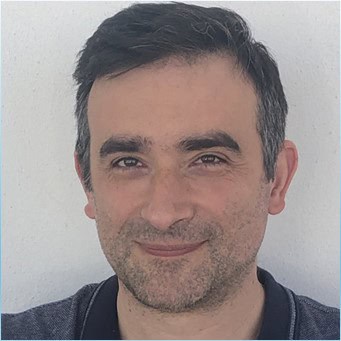
Prof. Rui C. Martins, PhD is an Associate Professor at the Department of Chemical Engineering, Faculty of Science and Technology, University of Coimbra, Portugal. His research focuses on environmental and chemical engineering, with particular emphasis on advanced water and wastewater treatment technologies, including advanced oxidation processes for the removal of emerging contaminants such as pharmaceuticals and personal care products. Prof. Martins has authored numerous scientific publications and has been actively involved in several national and international research projects related to sustainable water management and environmental protection. His work aims to develop innovative and sustainable technologies that support effective mitigation of chemical risks in the environment.
Prof. Isabel Cavaco (University of Algavre, Portugal)

Prof. Isabel Cavaco is an Associate Professor at the University of Algarve and a recognized expert in chemical regulation and sustainable research practices. She has contributed to international initiatives such as the ChIRS programme, focusing on the alignment of chemical risk assessment with evolving regulatory frameworks and sustainability goals. Her work addresses emerging challenges in chemical risk assessment, including the integration of interdisciplinary approaches, responsible innovation, and the implementation of sustainable development principles in both research and policy contexts.
Prof. Anna Białk-Bielińska
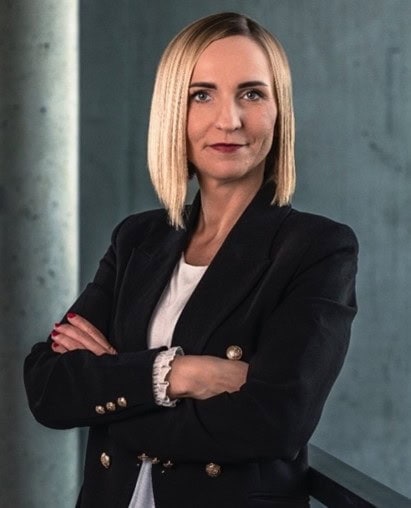
Prof. Anna Białk-Bielińska is an environmental chemist at the Faculty of Chemistry of the University of Gdańsk, where she serves as Deputy Dean for Research and International Relations and Head of the Department of Environmental Analysis. Her research focuses on environmental analytics, particularly the occurrence, mobility, persistence and ecotoxicity of pharmaceuticals and other emerging contaminants in the environment. She develops analytical and risk-assessment approaches to evaluate chemical hazards and their impact on ecosystems. Prof. Białk-Bielińska has led and participated in numerous national and international research projects and is an active member of the Polish Academy of Sciences Committee on Analytical Chemistry.
Prof. Tomasz Puzyn

Prof. Tomasz Puzyn is a leading expert in chemoinformatics and environmental chemistry at the Faculty of Chemistry of the University of Gdańsk. He is the founder and head of the Laboratory of Environmental Chemoinformatics, where his research focuses on computational methods for predicting the properties, toxicity and environmental risks of chemicals, nanomaterials and ionic liquids. Prof. Puzyn is a pioneer of computational nanotoxicology and has authored more than 150 scientific publications in leading journals. He is also the co-founder and Scientific Director of QSAR Lab, a spin-off company applying chemoinformatics tools to support safer chemical and material design.
Prof. Artur Giełdoń
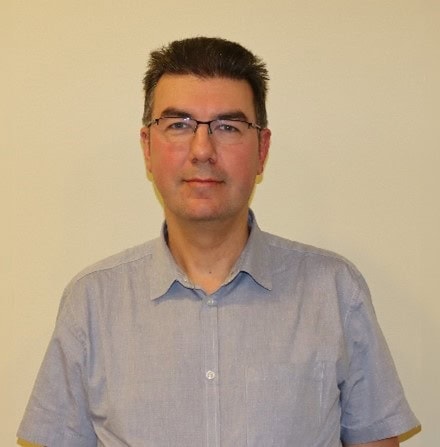
Prof. Artur Giełdoń is a professor at the Faculty of Chemistry of the University of Gdańsk and currently serves as Deputy Dean for IT and Development. His research interests focus on computational chemistry, bioinformatics and molecular modelling, particularly the structural analysis of biomolecules and the application of computational methods to understand biological processes and chemical interactions. Prof. Giełdoń has extensive experience in interdisciplinary research combining chemistry, biology and advanced computational techniques, contributing to the development of modern tools for molecular-level analysis.
Prof. Adriana Zaleska-Medynska
Prof. Adriana Zaleska-Medynska is a professor of chemistry at the University of Gdańsk and Head of the Department of Environmental Technology and the Photocatalysis Group. Her research focuses on heterogeneous photocatalysis, nanomaterials and advanced technologies for environmental protection, particularly in the fields of water, wastewater and air purification. She has over 25 years of experience in photocatalysis research and has authored more than 220 scientific publications and numerous patents. Her work bridges fundamental research and practical applications, including the development of innovative photocatalytic systems for pollutant degradation and air purification.
Prof. Ewa Siedlecka
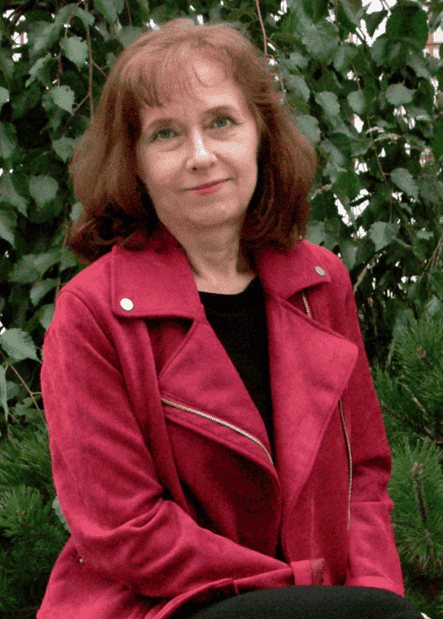
Prof. Ewa Siedlecka is a professor at the Faculty of Chemistry of the University of Gdańsk specializing in environmental chemistry and advanced oxidation processes. Her research focuses on innovative methods for the removal and degradation of organic micropollutants from water and wastewater, including pharmaceuticals and industrial contaminants. She works on advanced treatment technologies such as photocatalysis and other oxidation processes aimed at improving water quality and environmental safety. Prof. Siedlecka has contributed extensively to research on sustainable water treatment and environmental protection.
Prof. Magda Caban

Prof. Magda Caban is the Head of the Laboratory of Environmental Analytics and Monitoring at the Faculty of Chemistry, University of Gdańsk. She is an expert in the analytical chemistry of pharmaceuticals and emerging environmental contaminants, with over 13 years of experience in the application of advanced hyphenated techniques such as GC-MS and LC-MS/MS. Her research also covers the development of novel sorptive materials, advanced degradation methods for pollutants, and the ecotoxicological assessment of pharmaceuticals, particularly their effects on aquatic organisms including phytoplankton and zooplankton. Prof. Caban has participated in national and international research projects and has authored 89 peer-reviewed publications indexed in the Web of Science. She is recognized for her contribution to environmental monitoring, contaminant risk assessment, and the development of new biomarkers of pharmaceutical exposure, making her a valuable voice in discussions on the future of chemical risk assessment and environmental safety.
Prof. Adam Sieradzan

Prof. Adam Sieradzan is a professor at the Faculty of Chemistry of the University of Gdańsk specializing in theoretical and computational chemistry. His research focuses on the use of quantum-chemical methods and molecular modeling to understand the structure, reactivity, and properties of chemical systems at the molecular level. He applies advanced computational approaches to study reaction mechanisms, intermolecular interactions, and the electronic structure of complex systems, supporting the interpretation of experimental data and the prediction of chemical behaviour. His work contributes to the development of reliable theoretical frameworks used in modern chemical research.